
MethodeMethod
Zuerst verstehen, was ein Team braucht. Dann das Programm bauen.Understand what a team needs first. Then build the programme.
Für Projektleitende und die Führungskräfte, die ihnen den Rahmen geben. Bevor ich ein Programm entwerfe, finde ich heraus, was die Beteiligten antreibt und woran es gerade hakt – mit einem Motivationsmodell aus meiner Forschung und mit Needfinding aus dem Design Thinking. Erst danach entscheide ich, welche Methode passt: IPMA, PMI oder der agile Werkzeugkasten.For project leads and the managers who set them up to succeed. Before designing a programme, I find out what motivates the people involved and where things are getting stuck, using a motivation model from my own research together with needfinding from design thinking. Only then do I choose the method: IPMA, PMI or agile.
01 · Der Prozess01 · The process
Drei Schritte – und womit ich sie gehe.Three steps – and what goes into each one.
Erheben, entwickeln, begleiten kann jeder behaupten. Entscheidend ist, mit welchem Werkzeug und mit welcher Erfahrung.Assess, design, support – anyone can say that. What counts is the instrument behind it and the experience to use it.


Wer ein Programm kauft, bevor jemand mit den Beteiligten gesprochen hat, kauft eine Vermutung.Buy a programme before anyone has spoken to the people involved, and what you are buying is a guess.
02 · Zwei Grundlagen02 · Two foundations
Worauf ich schaue – und wie ich es herausfinde.What I look for – and how I find it.
Das eine beschreibt die vier Bedürfnisse, auf die es ankommt. Das andere liefert das Handwerk, sie zu erheben.One sets out the four needs that matter. The other gives me the craft to uncover them.
Grundlage 1Foundation 1
Das MotivationsmodellThe motivation model
Aus meiner Dissertationsforschung an der WU Wien. Vier Bedürfnisse treiben Menschen in Projekten an; drei davon stammen aus der Selbstbestimmungstheorie, Sinn kommt aus meiner eigenen Forschung hinzu. Ich setze das Modell ein, um zu erkennen, wo ein Team tatsächlich steht.From my doctoral research at WU Vienna. Four needs drive people on projects: three come from Self-Determination Theory, and purpose is the fourth, added through my own work. I use the model to see where a team really stands.

- Autonomie AutonomyAutonomy
Kontrolle über die eigenen Handlungen und Ziele im Projekt.Control over one’s own actions and goals within the project.
- Kompetenz CompetenceCompetence
Fähigkeiten erweitern und Aufgaben souverän bewältigen.Building skills and mastering tasks with confidence.
- Verbundenheit RelatednessRelatedness
Zugehörigkeit zu Team und Projekt spüren.A sense of belonging to the team and the project.
- Sinn PurposePurpose
Die eigene Arbeit mit einem grösseren Zweck verbinden.Connecting one’s own work to a larger purpose.
ReferenzenReferences
- Motivation of Young Project ProfessionalsLechler & Huemann · Project Management Journal, 2024
- The Future of Project WorkHuemann & Lechler · PMI Research Grant, Final Report, 2023
Grundlage 2Foundation 2
Die Design-Thinking-HaltungThe design thinking mindset
Needfinding heißt, Bedürfnisse systematisch zu erheben: Interviews, Beobachtung, Auswertung der Muster. In Projekten bei Kunden und Auftraggebenden, in Trainings bei der Gruppe. Wer nur die Methoden übernimmt, bekommt bunte Workshops ohne Wirkung – sieben Elemente machen die Haltung dahinter aus.Needfinding means uncovering needs systematically: interviews, observation and reading the patterns that emerge. On projects that means clients and sponsors; in training it means the group in the room. Take only the methods and you get colourful workshops that change nothing – seven elements make up the mindset behind them.
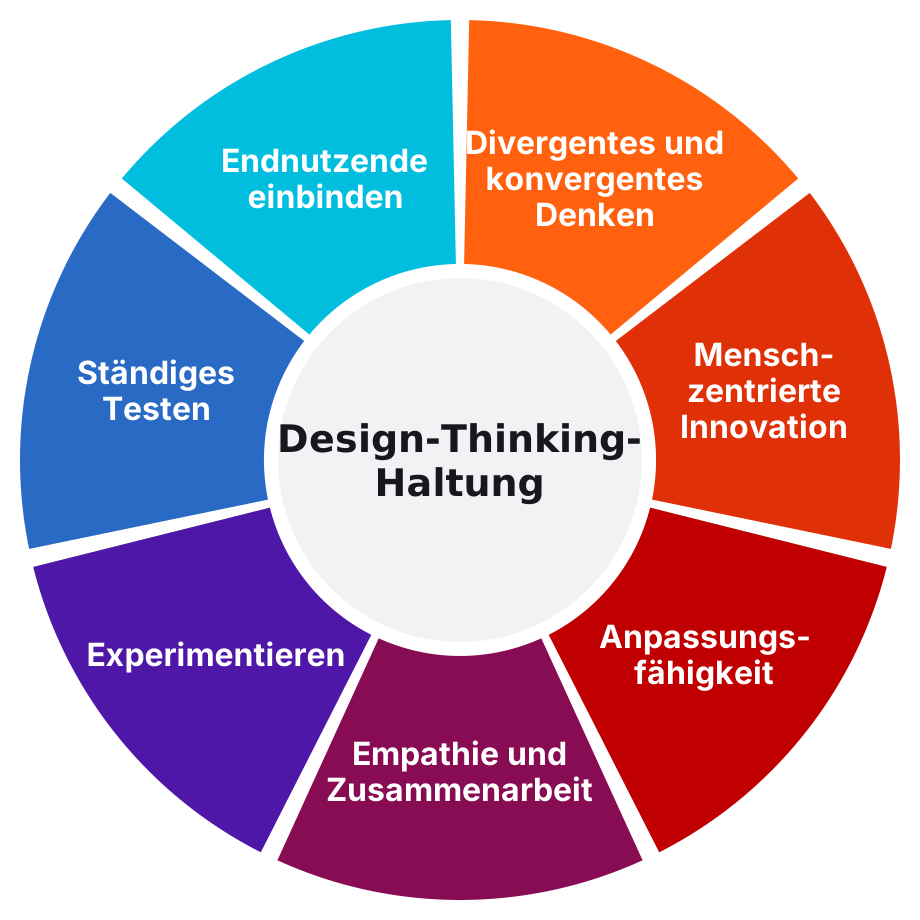
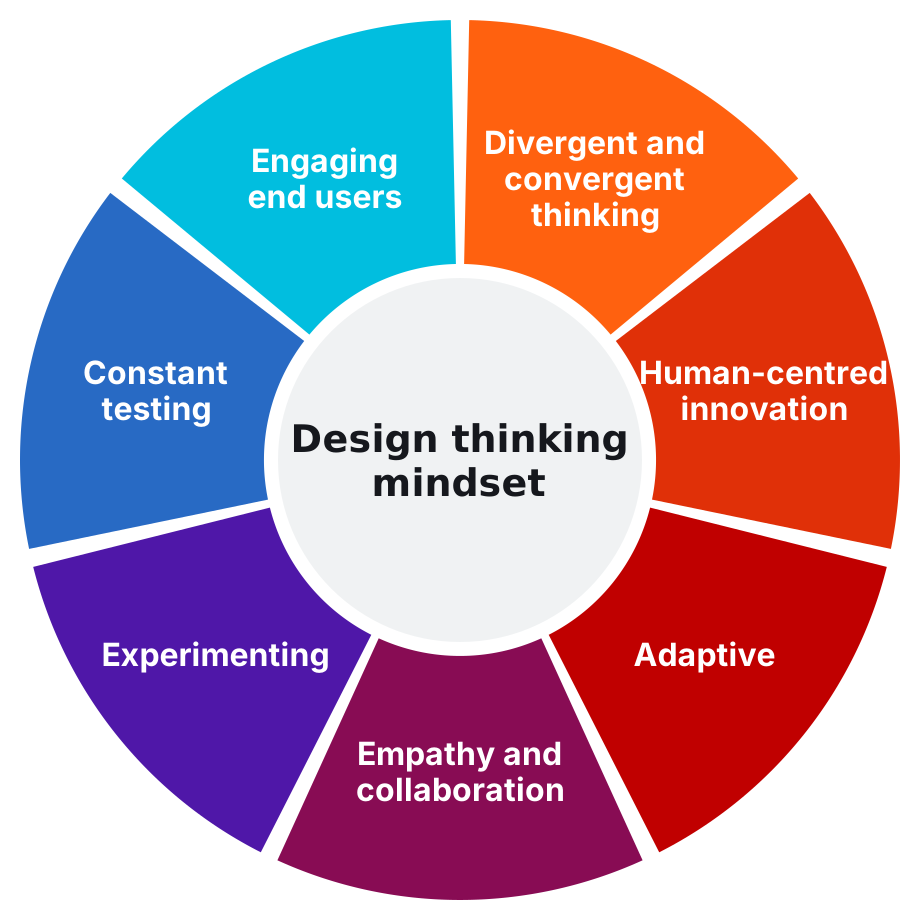
- Menschzentrierte InnovationHuman-centred innovationDer Nutzen für die Betroffenen entscheidet, nicht die technische Eleganz.What matters is the value for the people affected, not technical elegance.
- Divergentes und konvergentes DenkenDivergent and convergent thinkingErst den Möglichkeitsraum öffnen, dann entscheiden – nie beides zugleich.First open up the options, then decide – never both at once.
- Empathie und ZusammenarbeitEmpathy and collaborationVerstehen, bevor bewertet wird, und zwar über Rollen hinweg.Understand before you judge – and do it across roles.
- Einbindung der EndnutzendenEngaging end usersDie Betroffenen sitzen im Prozess mit am Tisch, nicht erst in der Abnahme.The people affected are in the room throughout, not just at sign-off.
- ExperimentierenExperimentingAnnahmen früh und billig prüfen, statt spät und teuer zu scheitern.Test assumptions early and cheaply rather than fail late and expensively.
- Ständiges TestenConstant testingJeder Prototyp bringt eine Rückmeldung, die die nächste Runde verändert.Every prototype produces feedback that changes the next round.
- AnpassungsfähigkeitAdaptiveDer Plan folgt den Erkenntnissen, nicht umgekehrt.The plan follows what you learn, not the other way round.
03 · Im Projekt03 · In the project
Drei Arten, Design Thinking einzusetzen.Three ways to bring design thinking in.
Welche Form passt, hängt davon ab, wie unklar das Problem am Anfang ist und wie viel Spielraum das Projekt später noch hat.Which one fits depends on how open the problem is at the start and how much room the project has to change course later.

- VorgeschaltetUpfrontEine Design-Thinking-Phase klärt Bedürfnisse und Richtung, bevor das Projekt startet. Passt, wenn das Ziel offen ist, die Umsetzung danach aber planbar sein muss.A design thinking phase clarifies needs and direction before the project begins. Suits an open goal that has to become a plannable delivery.
- EingestreutInfusedGezielte Elemente an einzelnen Stellen, etwa bei einer festgefahrenen Entscheidung oder vor einem Meilenstein.Selected elements at specific points – a decision that has stalled, or the run-up to a milestone.
- DurchgehendContinuousSchleifen aus Verstehen, Prototyp und Test von Anfang bis Ende. Passt für Innovationsvorhaben, bei denen sich das Ziel unterwegs ändern darf.Loops of understanding, prototyping and testing from start to finish. Suits innovation work where the goal is allowed to move.
ReferenzReference
- Design Thinking in ProjectsLechler, R. C., Huemann, M. & Lehner, P. · Buchkapitel in: The Handbook of Project Management, 6. Auflage (Huemann & Turner, Hrsg.), Taylor & Francis, 2024. Beide Grafiken auf dieser Seite stammen aus diesem Kapitel.Book chapter in: The Handbook of Project Management, 6th edition (Huemann & Turner, eds.), Taylor & Francis, 2024. Both diagrams on this page come from this chapter.
Beispiele aus der Praxis: die Mandate bei Generali Schweiz und in der agilen Strategieentwicklung unter Projekte. Alle Veröffentlichungen unter Wissen.Examples from practice: the mandates at Generali Switzerland and in agile strategy development under Projects. All publications under Insights.
Nächster SchrittNext step
Wo steht Ihre Organisation gerade?Where does your organisation stand today?
Im Erstgespräch klären wir, ob eine Erhebung sinnvoll ist und wie es danach weitergeht.In a first conversation we work out whether an assessment makes sense, and what would follow from it.